
Lake Worth Beach Previous Residents by Era
No single roll lists every person who once lived at an address. Current parcel data and recorded deeds establish the ownership chain. Directories, census schedules, newspapers, and probate material add the household layer. The useful starting source depends on the date being studied. The table keeps ownership evidence apart from occupancy evidence, a key distinction when tracing previous residents in Lake Worth Beach.
| Local source | Verified span | Keeper or access point | Evidence supplied |
|---|---|---|---|
| PAPA parcel and sales history | Current record plus displayed sales | Palm Beach County Property Appraiser | Owner, site and mail addresses, homestead, deed book/page |
| Clerk Official Records | Online start not stated; older books and film remain | Landmark and Main Courthouse | Grantors, grantees, dates, legal descriptions, liens |
| Polk area directories | Documented samples, 1916–1980/81 | Palm Beach County Main Library | Listed household or business, address, spouse, occupation |
| Federal census | Public schedules through 1950 | NARA and library databases | Occupants and household relationships |
| Lake Worth Herald | 1912–1970 | Lake Worth Beach City Library archive | Notices, advertisements, obituaries, and named local events |
| Sanborn maps | 1928, with 1940 and 1947 updates | Historic map collections | Building form, use, materials, and address context, not occupants |
For a recent transfer, begin with PAPA Advanced Search and follow its book/page reference into the Landmark Official Records index. For an early or mid-century household, identify the parcel first, then compare a directory year with the nearest public census. When a deed image or index period is unavailable online, the physical book, film, or paid Clerk search is the proper fallback. Never turn “not online” into “no record.”
Note: The Clerk does not publish an exact earliest Landmark index year, so confirm coverage before stating that an older deed is missing.
Previous Residents in Lake Worth Beach Deeds
The deed chain gives the firmest route from a current parcel to earlier owners. PAPA distinguishes the property location, sometimes called the situs address, from the owner’s mailing address. It also supplies the parcel control number, legal description, last sale, and official-record book/page. Those keys are safer than a street name alone because an old instrument may use an earlier place name or a legal lot-and-block description.
- Find the exact parcel in PAPA. Save the PCN, subdivision, legal description, owner, sale date, and book/page.
- Open the linked purchase deed in Landmark. Record each grantor and grantee, the instrument date, and the legal description.
- Search the seller as a grantee in an earlier date range. Confirm the same land description before accepting a match.
- Repeat the seller-to-buyer step. Name-only matches are unsafe, especially for common names or family transfers.
- When the online trail stops, ask the Records Service Center for a search or inspect the older book or film at Main Courthouse.
- Grantor and grantee
- The grantor transfers the interest; the grantee receives it.
- Chain of title
- The linked sequence of recorded transfers for the same parcel.
- Legal description
- The recorded land identity, often subdivision, block, and lot. It remains useful when a street label changes.
- PCN
- The 17-digit parcel control number used to identify Palm Beach County land.
The Records Service Center allows free online viewing and printing of uncertified copies. At the counter or by mail, standard pages cost $1 each; certification and searches add charges. A mailed search needs the exact name, date range, requester information, payment, and a stamped return envelope. The center is at Main Courthouse, Room 4.2500, 205 N. Dixie Highway in West Palm Beach, and the records line is 561-355-2932.
Lake Worth Beach Previous Residents Name Changes
Older previous-resident research can fail because the locality’s label changed, not because the household vanished. The founding townsite was called Lucerne, the incorporated city became Lake Worth, and the official name changed to Lake Worth Beach in 2019. Search all three names in catalogs, newspapers, deeds, maps, and archive finding aids. Keep the parcel’s legal description beside the address so the same land can be recognized across those labels.
Address language can shift too. A postal “Lake Worth” address may lie beyond today’s Lake Worth Beach boundary. PAPA’s Municipality field settles which government holds permit or code records. Inside the city, municipal lien and building files may add work dates, applicants, owners, utility balances, or open permits. Outside it, Palm Beach County Planning, Zoning and Building is the likely custodian. Such files date work, not a household’s move.
Search tip. Use the legal description, PCN, and municipality when a modern street search fails; each key is less fragile than a mailing label.
Bridge Lake Worth Beach Resident Record Gaps
The searchable Lake Worth Herald archive spans 1912 through 1970. Addressed advertisements, social notices, legal notices, and obituaries can place a named person between directory or census years. Search the surname with the street name, then repeat with spelling variants and earlier city names. A newspaper mention is a lead, not proof of ownership, so compare it with the deed and directory record.
The Palm Beach County Library genealogy service supports work with city directories, newspapers, census sources, and local-history material. Its research assistance is especially useful when an item is held in a database or physical collection rather than on an open web page.
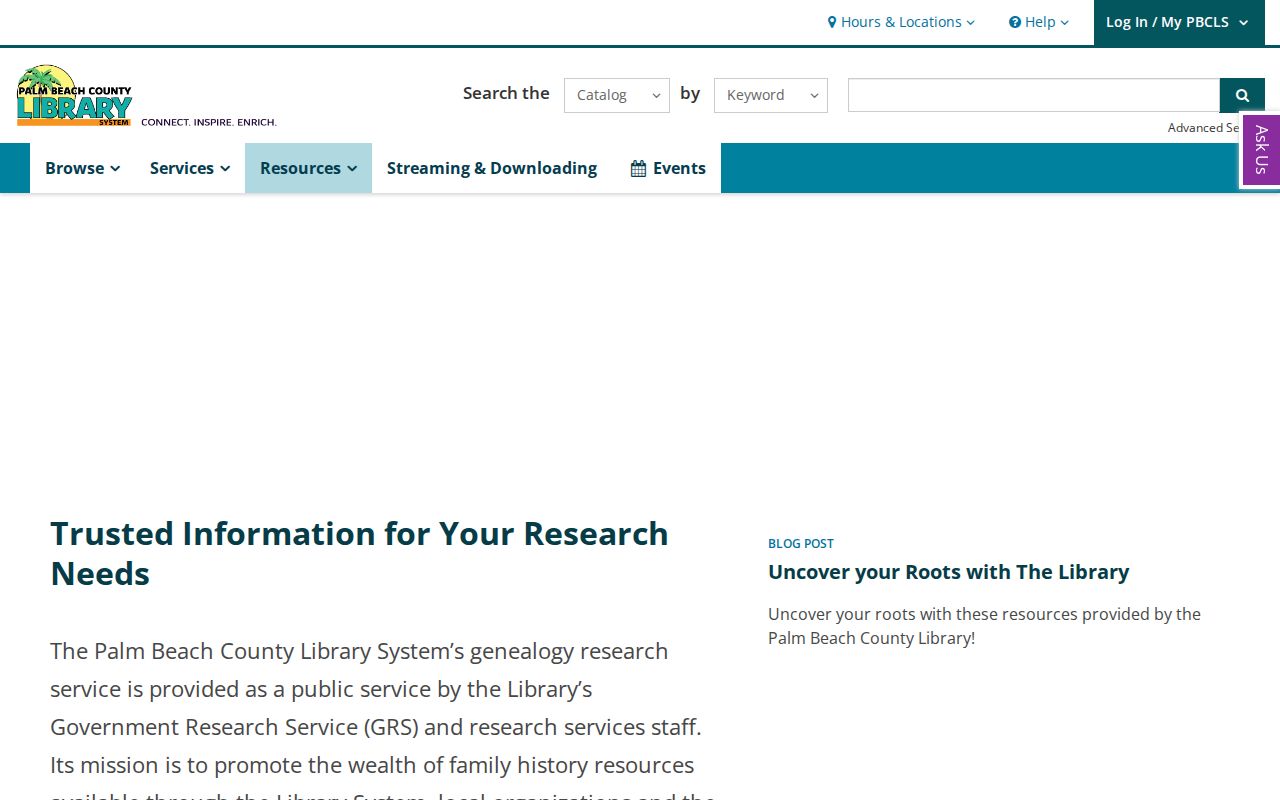
The captured genealogy page shows the county library route that can fill the space between recorded owners and named occupants.
Map Lake Worth Beach Previous Residents
Sanborn fire-insurance sheets from 1928, with updates documented for 1940 and 1947, reveal a building’s footprint, construction, use, and address label. They do not name residents. Use a sheet to confirm that the structure existed and to resolve an old number, then read the nearest directory and public census for people. Federal schedules are public through 1950 in 2026.
- Match the parcel’s block and lot to the historic map and note the address shown.
- Check a nearby directory year by address or reverse listing.
- Locate the block in the closest census, using its enumeration district when needed.
- Compare names, ages, relationships, and occupancy clues across sources without assuming every listed person owned the property.
A criss-cross directory is arranged by address or phone rather than just surname. An enumeration district is the small area assigned to a census taker. Both help when the resident’s name is unknown. The National Archives directory list confirms Lake Worth coverage with West Palm Beach and Palm Beach for 1928–1932, while the State Library city-directory catalog opens another holdings route.
Note: Historic maps date the property and its labels; only household sources identify people who lived there.
Lake Worth Beach Permits Fill Dates
A deed records an interest in land, but it rarely explains when a house was remodeled, enlarged, damaged, or replaced. For parcels inside the municipality, the Lake Worth Beach City Clerk routes public-record requests and municipal lien searches. A lien search can concentrate special assessments, city code liens, utility balances, open permits, and related property facts in one address request. Planning, building, and code files may identify the site, work, dates, contractor, owner, or applicant.
These records help test a house-history timeline. A major permit between two directory editions may explain a changed unit count or a gap in address listings. An open permit or code notice can also show who was responsible for the property at a specific time. Neither proves that the named owner, contractor, or applicant lived there. For a postal “Lake Worth” parcel outside the city, verify the Municipality field in PAPA and use Palm Beach County Planning, Zoning and Building instead.
Record trail. Address → municipality check → permit or lien file → dated work → directory or census comparison.
Estates End Lake Worth Beach Trails
A previous owner may disappear from directories because of death rather than a sale or move. Start with a Lake Worth Herald obituary or death notice, then compare the municipal burial locator for Pine Crest and I.A. Banks cemeteries. The two cemeteries preserve distinct community histories, so search both rather than assuming every local burial used one ground. A matching name and date is a lead; the parcel, family details, and later deed must still agree.
The Palm Beach County probate docket may identify the estate, personal representative, or case dates. Guest users can discover some docket information in eCaseView, but probate document images may require registered party access, a counter visit, or an authorized copy order. The successor deed then reconnects the estate to the land by naming the recipient and repeating the legal description.
- Find the last reliable address listing and the owner’s recorded name.
- Search obituary, cemetery, and probate sources with name variants and an approximate date.
- Identify the representative or heirs shown in the authorized record.
- Confirm the next recorded deed uses the same legal description before closing the trail.
Close a Lake Worth Beach Household Trail
Owners are only half the history. Reverse directories and census pages may identify listed occupants who never appear in title records. For details about publishers, shelf holdings, and how entries read, use the Lake Worth Beach city directories. Telephone directories held for 1934 through June 1948 and June 1949 through December 1953 can add a subscriber, address, and phone, but an unlisted person will remain absent.
When a name disappears after death, an obituary, municipal cemetery entry, probate docket, and successor deed can form a clean chain. The City Clerk links burial information for Pine Crest and I.A. Banks cemeteries, which preserve distinct local histories. Palm Beach County probate dockets can identify an estate or personal representative even when guest users cannot open an image online. Restricted material must be requested through the authorized court channel.
Florida vital records add dates and family links under specific access rules. Marriage and dissolution certifications are public. Birth certificates remain confidential until 125 years old unless otherwise authorized, while cause-of-death and protected medical or parent information stays restricted for 50 years. The Florida vital-record access statute is the source for those limits.
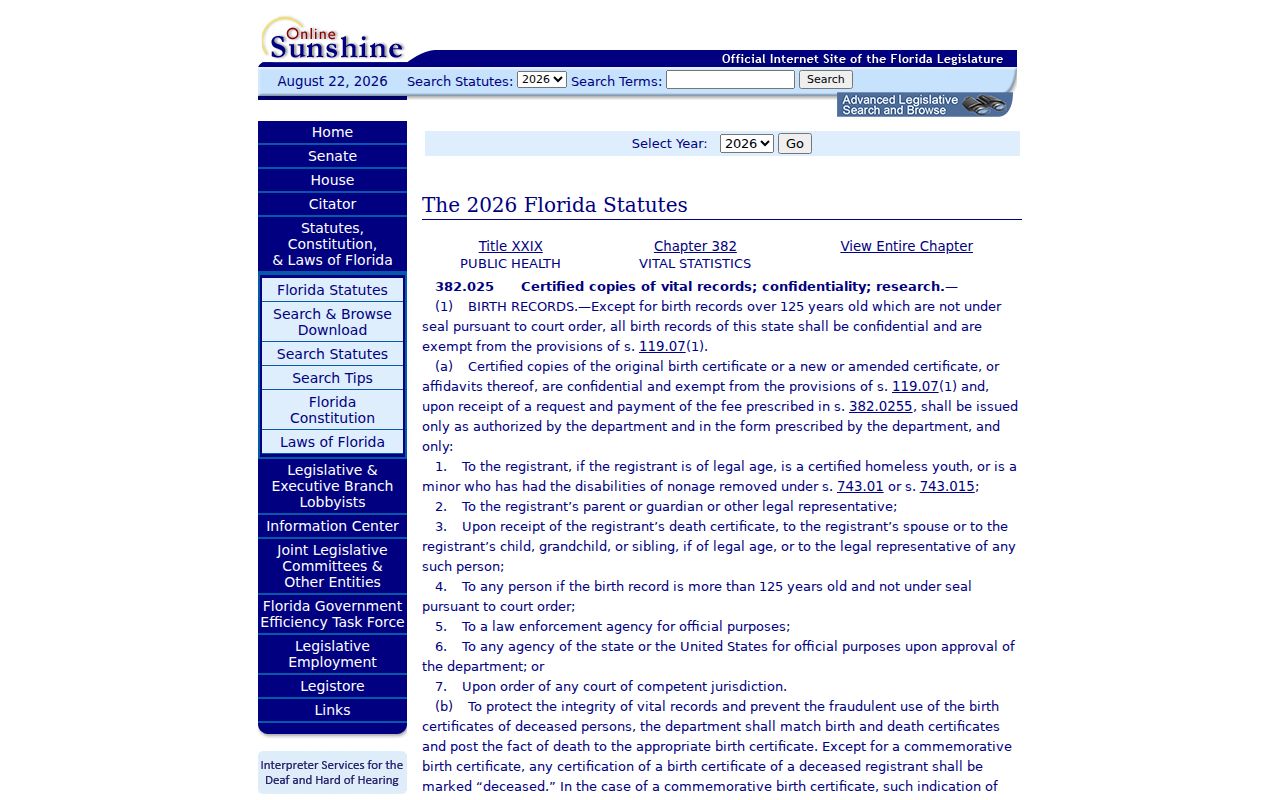
The statute image underscores why an address trail may point to a vital record without making every detail open to the public.
Federal litigation is a separate, occasional trail. The PACER Case Locator covers federal courts, including cases associated with the Southern District of Florida, and should be used only when the known event was federal rather than county or probate business.
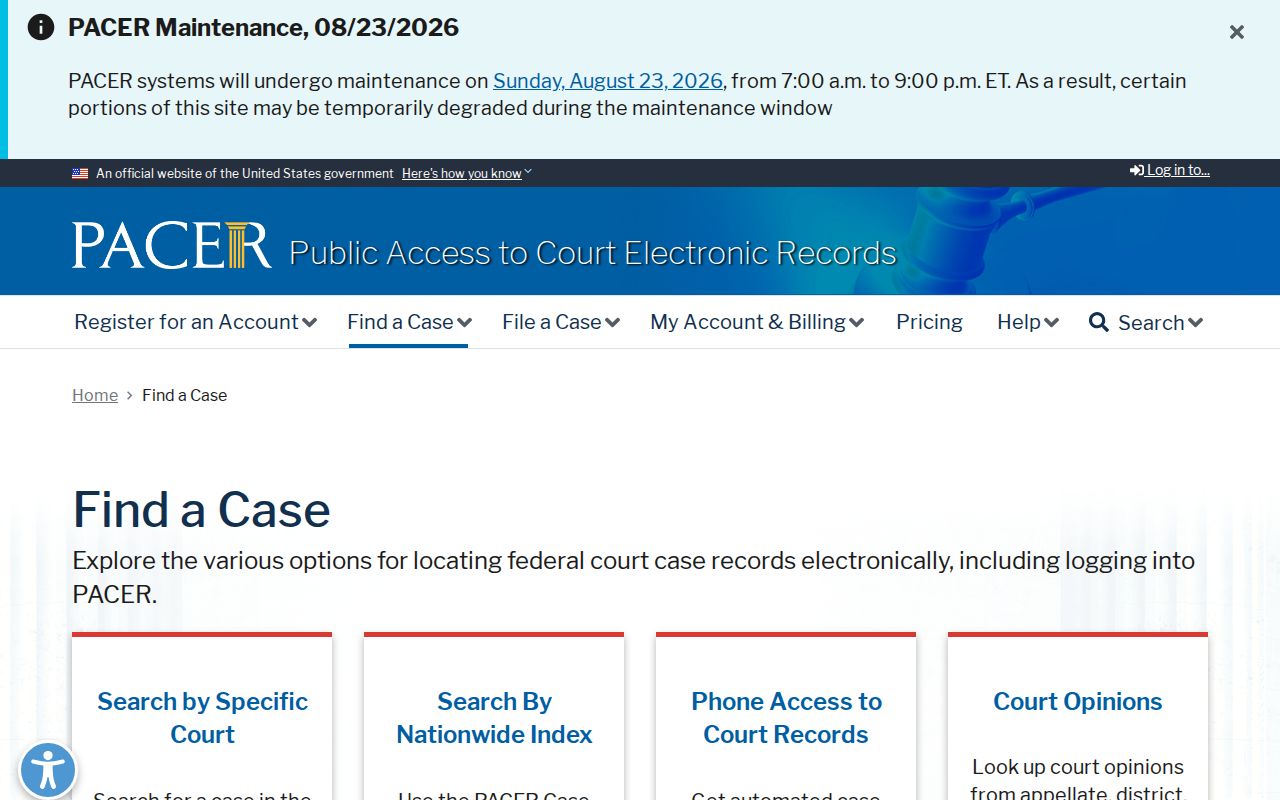
The locator provides a distinct federal case route; it does not replace Palm Beach County deeds, local court files, or household sources.
Lawful use. Research previous residents for house history, genealogy, estates, or personal curiosity. Florida law does not permit stalking, harassment, threats, or attempts to defeat protected-address programs.